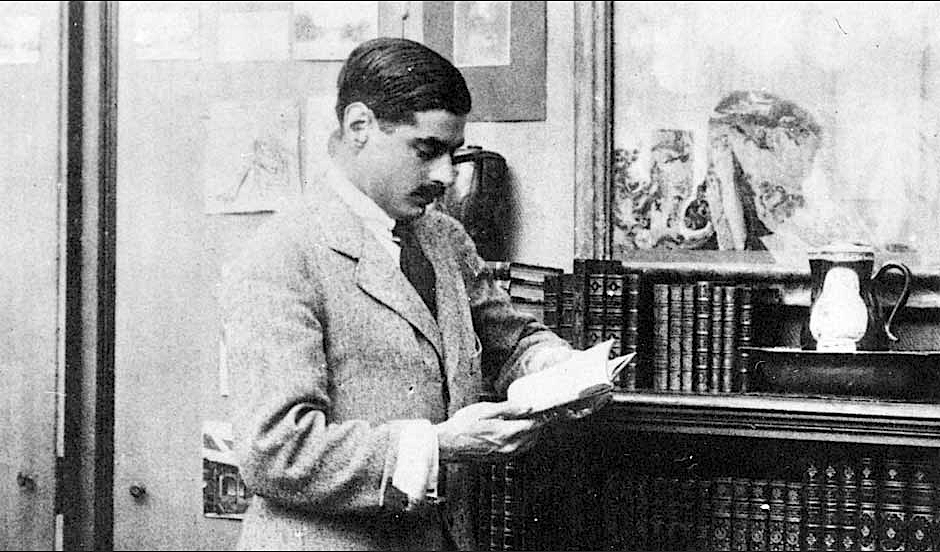
In popular culture and fashion history, Arthur Edward “Boy” Capel is most frequently cast in a supporting role: the dashing English polo player, financier, and great love of Gabrielle “Coco” Chanel. Yet behind the romantic mythology lies the fascinating story of a self-made shipping tycoon, a wartime political strategist, and a man of complex Anglo-French roots whose real life was every bit as compelling as the legend.
Origins and Family Background
Contrary to persistent rumors in early Chanel biographies suggesting he was the illegitimate scion of the Earls of Essex, historical records show that Arthur Edward Capel came from an established, industrious mercantile family with paternal roots in Ireland.
Born on 20 December 1881 in Brighton, Sussex, he was the only son of Arthur Joseph Capel, a successful British coal and shipping merchant, and his French-born wife, Berthe Andrée Lorin. Growing up alongside three sisters—Marie Henriette, Mary Josephine, and Berthe Isabelle—Arthur was bilingual and culturally at ease on both sides of the English Channel from an early age. His extended family also had its share of Victorian notoriety; his paternal uncle was Monsignor Thomas John Capel, a once-celebrated Catholic society orator in Westminster whose career ended in high-profile scandal.
Educated at Beaumont College, a prestigious Jesuit boarding school in Berkshire, Capel entered the family’s maritime and coal trade. By his late twenties, through sharp commercial instincts and the booming European demand for British coal, he had amassed a substantial independent fortune.
The Sportsman and Muse to Coco Chanel
Tall, dark-haired, and charismatic, Capel was a fixture of Edwardian high society and an accomplished polo player. It was through equestrian circles in France that he met Gabrielle Chanel around 1909—at the time, the mistress of his friend Étienne Balsan.
Capel recognized Chanel’s creative ambition long before the fashion world did. Their nine-year romance transformed modern fashion in two crucial ways:
- Financial Backing: Capel provided the capital that allowed Chanel to establish her first Parisian millinery shop at 21 Rue Cambon in 1910, followed by her breakthrough boutiques in the resort towns of Deauville (1913) and Biarritz (1915). By 1916, Chanel’s enterprises were so successful that she repaid his investment in full.
- Sartorial Inspiration: Chanel frequently borrowed Capel’s tailored English blazers, wool jerseys, and nautical sweaters. Translating his relaxed, masculine wardrobe into women’s wear laid the foundation for the liberated, jersey-clad silhouette that dismantled the Edwardian corset.
Wartime Statesman and Author
While fashion historians focus on his boutiques and polo matches, Capel’s contemporaries also knew him as a serious intellectual and public servant. During World War I, his shipping fleet was vital to transporting coal between Britain and France, and he served as a liaison officer and assistant secretary to the Supreme War Council at Versailles.
A close confidant of French Prime Minister Georges Clemenceau and British Prime Minister David Lloyd George, Capel was deeply affected by the devastation of the war. In 1917, he published Reflections on Victory and a Project for the Federation of Governments, a forward-looking political treatise advocating for a peaceful European federation to prevent future nationalist conflicts. For his wartime service, he was appointed a Commander of the Order of the British Empire (CBE).
Marriage and Tragic Death
Despite his lifelong devotion to Chanel, the rigid social conventions of the era led Capel to seek an aristocratic marriage in England. In 1918, he wed the Honourable Diana Wyndham (née Lister), the widowed daughter of Thomas Lister, 4th Baron Ribblesdale. Together, they had two daughters: Ann Diana France Ayesha (born 1919) and June (born posthumously in 1920). Even after his marriage, however, Capel’s affair with Chanel continued.
On 22 December 1919, just two days after his 38th birthday, Capel was driving along the Côte d’Azur near Puget-sur-Argens in southern France—reportedly on his way to a Christmas rendezvous with Chanel—when a tire blew out on his car. He was killed instantly in the crash.
Buried with full military honors at Fréjus Cathedral on Christmas Eve, Capel was later memorialized by Chanel with a stone cross at the roadside where he died. Decades later, Chanel told her friend Paul Morand:
“In losing Capel, I lost everything.”